My Projects

A showcase of my works and contributions

A selection of software, web and game projects I worked on, with my role in each. See my background and skills to learn more.

What I've Built

Each project shows the tools I used, my role, and more detail about the work.

964's C# Game Development Toolkit

A set of reusable modules for C# game projects, covering display names, timers, settings, save slots and music playback. Packaged as a Unity package and built against netstandard2.0, so the modules work in Unity and other C# environments.

Display Name validates Unicode-aware usernames, NPC names and item names. Save Data handles save slots and metadata. Each module ships with automated and manual testers.
Date
2026 November
Technologies
C#, .NET, Unity
Type
Library
Status
Ongoing (v0.1.0)
Role
Owner & Maintainer

More about the toolkit

  • C#
  • .NET
  • Unity
  • UPM
  • Reusable Modules

Modules

  • Display Name: format, script and length validation for usernames, NPC names and item names. No moderation, uniqueness or confusable-character checks.
  • Timer: countdown and count-up timers driven by Update(), with events, adjustments and a pluggable time provider for tests.
  • Settings: a typed key-value store for configuration values.
  • Save Data: slot metadata, limits, rename and delete. Storage and serialization are supplied by the consumer.
  • CSMusicPlayer: playback and playlist state over an audio backend the consumer supplies, with no decoding or output of its own.

Design principles

No UI or presentation logic. Behaviour is configured through options objects rather than hardcoded rules. Storage, serialization, time and audio are injected through interfaces, and engine-specific adapters stay out of the core.

Distribution

UPM package com.964.gamedevelopmenttoolkit v0.1.0, with automated and manual testers per module.

I own and maintain the package and the testers shipped with each module as an ongoing project.

View on GitHub

OUTRUN official artwork

OUTRUN

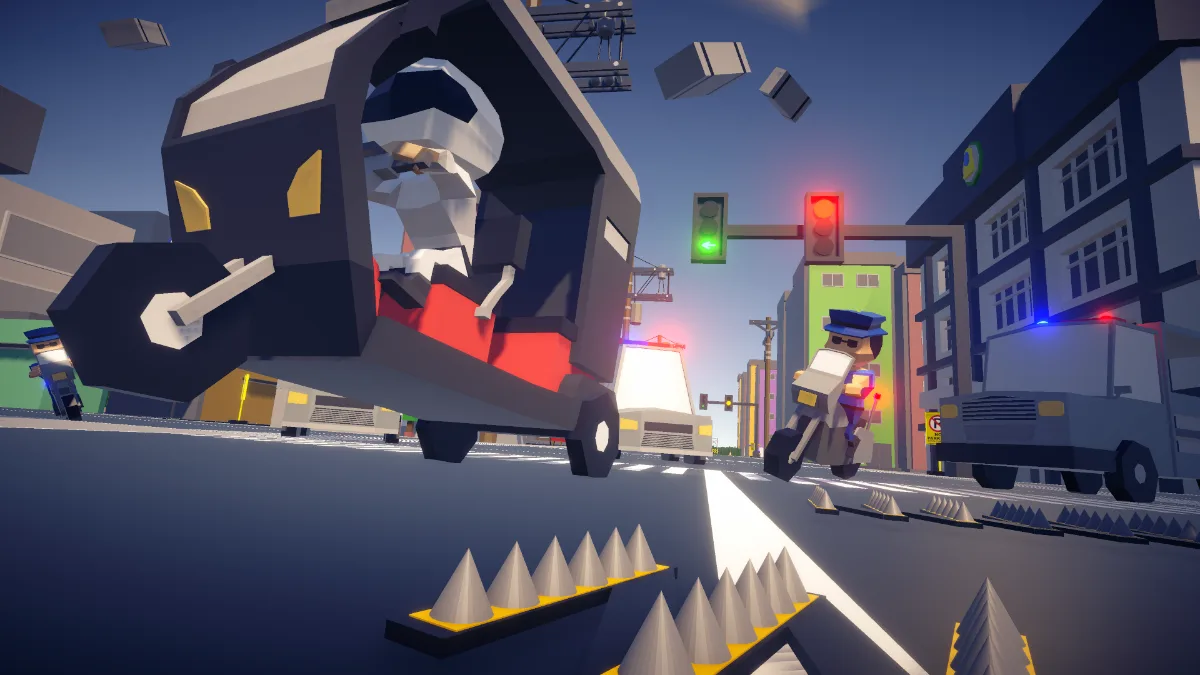
A 2.5D isometric chase game. The player rides an e-bike through city traffic while a police pursuit scales with heat: patrol cars, motorcycles, roadblocks, spike strips, officers on foot.

Battery charge limits sprint speed, and crashes wear down durability until the run ends. Meter Points earned from distance and heat unlock eight more vehicles, plus motor, battery and durability upgrades.

Date
2026 October
Technologies
Unity, C#
Type
Game
Status
In development (v0.3.3)
Role
Game Designer & Lead Developer
Platforms
Windows, Android

More about OUTRUN

  • Unity
  • C#
  • 2.5D
  • Game Development
  • Android

Pursuit

Police response is tied to heat. Higher heat adds patrol cars, motorcycles, roadblocks, spike strips and officers on foot. Leaving line of sight cools the search.

OUTRUN gameplay: a police roadblock ahead of the rider.
Police roadblock

Ride

Sprinting drains the battery faster, low charge lowers top speed, and crashes wear down durability. Spare batteries are scattered across the city. A failed durability ends the run.

OUTRUN gameplay: a run in progress through city traffic.
A run in progress

Garage

Nine vehicles are available in total, starting with the e-bike. Eight more, including a wheelchair and a shopping cart, unlock with Meter Points alongside motor, battery and durability upgrades. Runs are scored on a local scoreboard.

I designed the game and led development of the pursuit and progression systems across a five-person team.

Download on itch.io

TRIGGR

A Windows multiplayer shooting game built in about 12 hours. Each room supports up to 20 players, everyone can shoot and respawn, and the first player to reach 30 kills wins.

The prototype was built by a three-person team with Unity 6.3 and C#, using Photon for the multiplayer server. It is unreleased, and there are no current plans to continue it.

Date
2026 October 10 – 11
Technologies
Unity 6.3, C#, Photon
Type
Multiplayer Game
Status
Unreleased Prototype
Role
Game Developer
Platform
Windows

More about TRIGGR

  • Unity 6.3
  • C#
  • Photon
  • Multiplayer
  • Shooting Game
  • Windows
  • Prototype

Development window

TRIGGR was built in about 12 hours over 2026 October 10 – 11, from an afternoon start to a 4:00 AM finish.

Match rules

Each room supports up to 20 players. Everyone can shoot and respawn, and the first player to reach 30 kills wins.

Implementation

The Windows game was built by a three-person team with Unity 6.3 and C#, using Photon for the multiplayer server.

The game is unreleased, and there are no current plans to continue it.

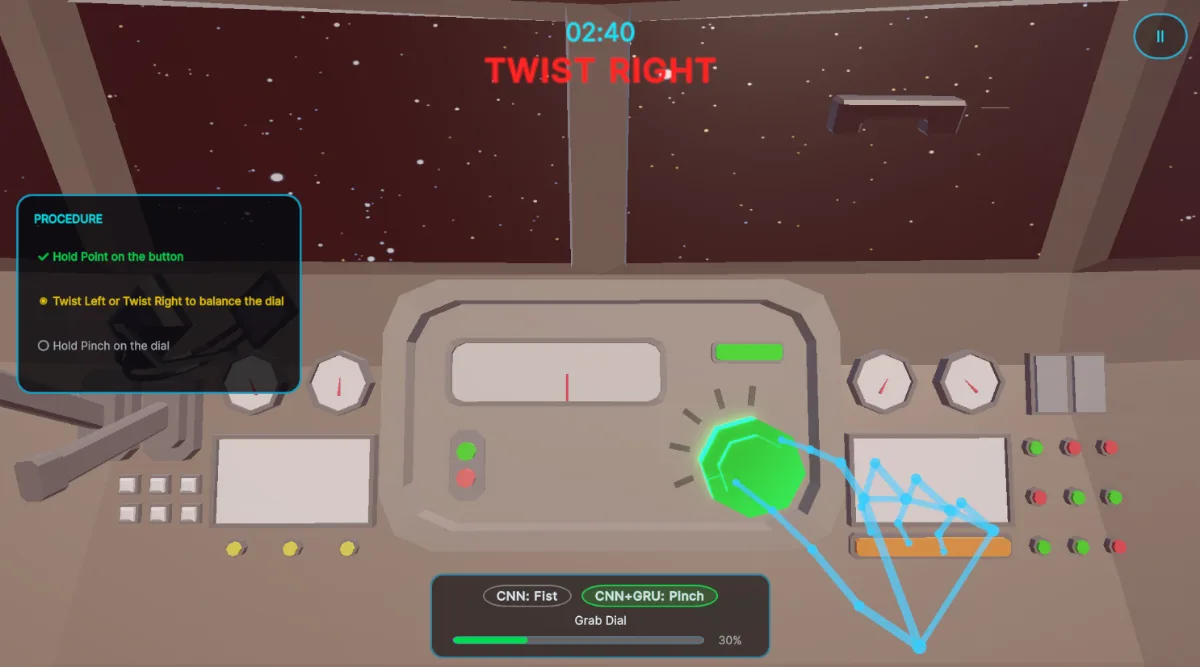
MUTED gameplay.

MUTED

A webcam-controlled game driven by hand gestures, built as a thesis. It compares two model pipelines, CNN and CNN+GRU, to test whether temporal modelling is necessary for real-time gesture-driven control.

Models were trained in Python and run in Unity through ONNX Runtime. Both pipelines were scored against the same recorded sessions.

Date
2026 October
Technologies
Unity, C#, Python, ONNX Runtime
Type
Thesis
Status
Defended
Role
Lead Developer

More about MUTED

  • Unity
  • C#
  • Python
  • ONNX Runtime
  • Gesture Recognition
  • Computer Vision
MUTED gameplay.
Gesture-driven play

Question

The thesis tests whether a temporal model improves gesture recognition over a static one. CNN and CNN+GRU share preprocessing and are scored on the same recorded sessions.

Training and deployment

Models were trained in Python and run in Unity through ONNX Runtime. Unity's Barracuda runtime could not execute the GRU layer set, which is what forced the switch.

Material

The input is gesture data captured through the webcam and stored as sessions that both pipelines can replay.

MUTED main menu.
Main menu

I built the game and model integration in Unity, trained both pipelines in Python, and deployed them through ONNX Runtime.

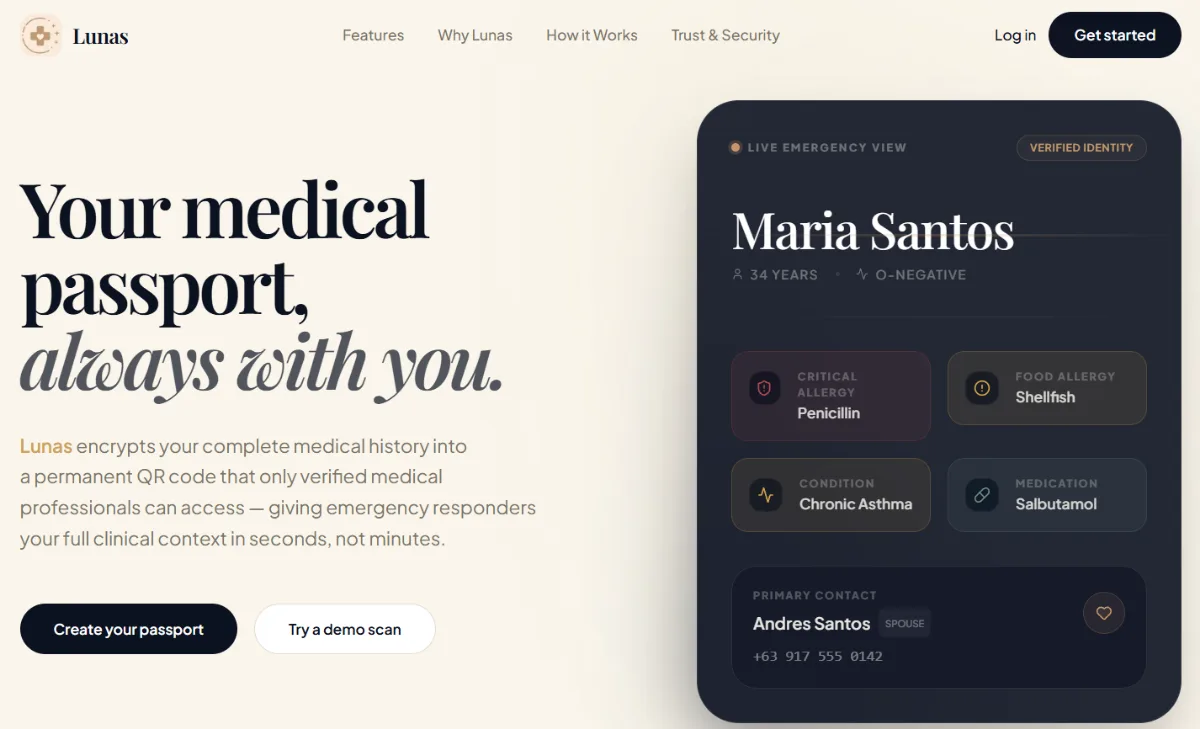
The Lunas homepage.

Top 8 National

Lunas

A web-based emergency medical information system. A patient's medical history is reached by scanning a unique QR code, so responders get allergies, medication, blood type and conditions when the patient cannot speak for themselves.

Built in under 24 hours by an eight-person team, the client covers a dashboard, medical profile, QR code and access log, plus registration for patients and medical professionals. The project placed Top 8 nationally at SIKAPTala 2026.

Date
2026 May
Technologies
Next.js, Tailwind CSS, TypeScript
Type
Web application
Status
Prototype
Role
Front-End Developer

More about Lunas

  • Next.js
  • TypeScript
  • Tailwind CSS
  • QR Codes
  • Health Informatics
The Lunas homepage.
Homepage

Patient client

A dashboard, a medical profile, the patient's QR code and an access log, plus registration flows for patients and medical professionals. Built in under 24 hours.

The Lunas registration form.
Registration

What the code carries

A UUID rather than the record itself, so a scan resolves to the patient's current data and a printed code stays valid after an update.

What a scan records

Each scan is written to the patient's access log, and the emergency contact on file is notified.

Offline

A reduced profile for low-signal areas, alongside the live record.

I built the patient client, its QR code and access-log screens, and both registration flows within the eight-person team.

Visit site View achievement